Causes of heart disease
Some authorities consider one of the main contributory causes of heart disease to be hormone imbalances induced by environmental poisons, especially endocrine disrupting chemicals (EDCs) and the so called 'xeno-estrogens'. Research has linked exposure to some EDCs with altered lipid metabolism, cardiometabolic dysfunction and atherosclerosis. (1, 2, 3). The link between progesterone and heart disease is thus established at many levels.
Heart disease has many manifestations. A heart attack occurs when the blood supply to the heart is cut off. In men this can be caused by either coronary atherosclerosis (deposits), thrombosis (blood clot), embolism (any foreign substance), or a spasm of the coronary artery.
In women the link between a lack of progesterone and heart disease is perhaps stronger because of the action of estrogen. In women perhaps one of the commonest causes of heart disease is a spasm. As we age arteriosclerosis or hardening of the arteries also plays a role. (4, 5, 6) High blood pressure increases the risk of both heart attacks and strokes. Atherosclerosis, arteriosclerosis, thick blood and water retention all cause a rise in blood pressure. A normal blood pressure irrespective of age should be around 120/80 mm Hg. (7)
A healthy total cholesterol level should be 190 -210mg/dl. The average level in the USA is 220mg/dl, whereas people living in rural areas eating whole foods and little animal protein have levels between 120 to 160mg/dl. Too low a level increases the incidence of aggressive behaviour, strokes, depression and suicides. (8, 9, 10)
There are a number of factors which influence the causes of heart disease...
A diet high in oxidised fats and low in anti-oxidants, an excess of sodium and a lack of: potassium, calcium, magnesium, Omega 3, Vit A, C, E, selenium and zinc.
A lack of magnesium in particular can cause a coronary artery to go into spasm. (11) Omega 3 essential fatty acid is involved in the reduction of the prostaglandin thromboxane in the blood, which if too high can cause the arteries to go into spasm, increase blood clot formation and cause palpitations or arrhythmias. (12, 13 )
Because research has shown that estrogen can cause coronary arteries to go into spasm a lack of progesterone may be considered one of the causes of heart disease. (5, 6, 14) Contrary to popular opinion estrogen does not prevent heart disease. It causes salt and water to be retained and potassium and magnesium to be lost, thereby increasing blood pressure. (15)
The hormone progesterone, on the other hand, is a natural diuretic and protects against this. (16, 17) Estrogen promotes fat synthesis and blood clots while progesterone increases the burning of fats. Estrogen also accelerates the aging of collagen, weakening the walls of the arteries. (15)
Avoidance of the causes of heart disease will be assisted by...
The avoidance of all forms of estrogen, oxidised fats (ie: all refined oils and fats including margarine, fried foods in particular), meat, a reduced sodium intake, an increased intake of potassium, calcium and particularly magnesium and the anti-oxidants Vitamins A, C, E, selenium and zinc, omega 3 which thins blood by lowering total cholesterol and triglyceride levels. (15, 18,19)
Magnesium prevents cramping of arteries and muscles, of which the heart is one. It is also very effective at preventing palpitations or arrhythmias.
Progesterone counteracts the effects of estrogen and is known to relax coronary arteries that have gone into spasm, it also normalises blood clotting and brings down blood pressure by acting as a diuretic. (5, 15, 20, 21, 22)
To find out more about progesterone therapy in general and how it benefits health issues other than those relating to the causes of heart disease, please click here.
References:
1. Epigenetic impact of endocrine-disrupting chemicals on atherosclerosis, Lin TA, Zhou C. Epigenetic impact of endocrine-disrupting chemicals on atherosclerosis. Essays Biochem. 2025 Nov 26;69(3):211-228. doi: 10.1042/EBC20253022. PMID: 40857741; PMCID: PMC12493181.
2. Epigenetic impact of endocrine disrupting chemicals on lipid homeostasis and atherosclerosis: a pregnane X receptor-centric view ,Helsley RN, Zhou C. Epigenetic impact of endocrine disrupting chemicals on lipid homeostasis and atherosclerosis: a pregnane X receptor-centric view. Environ Epigenet. 2017 Oct 1;3(4):dvx017. doi: 10.1093/eep/dvx017. Epub 2017 Oct 23. PMID: 29119010; PMCID: PMC5672952.
3. Endocrine-Disrupting Effects of Bisphenol A on the Cardiovascular System: A Review, Fonseca MI, Lorigo M, Cairrao E. Endocrine-Disrupting Effects of Bisphenol A on the Cardiovascular System: A Review. J Xenobiot. 2022 Jul 13;12(3):181-213. doi: 10.3390/jox12030015. PMID: 35893265; PMCID: PMC9326625.
4. The mechanism of coronary artery spasm: roles of oxygen, prostaglandins, sex hormones and smoking, Karmazyn M, Manku MS, Horrobin DF. The mechanism of coronary artery spasm: roles of oxygen, prostaglandins, sex hormones and smoking. Med Hypotheses. 1979 Apr;5(4):447-52. doi: 10.1016/0306-9877(79)90110-5. PMID: 459992.
5. Coronary artery spasm: a hypothesis on prevention by progesterone, I. Kanda, M. Endo, Medical Hypotheses, Volume 49, Issue 2, 1997, Pages 183-185, ISSN 0306-9877, doi.org/10.1016/S0306-9877(97)90227-9.
6. Medroxyprogesterone interferes with ovarian steroid protection against coronary vasospasm, Miyagawa K, Rösch J, Stanczyk F, Hermsmeyer K. Medroxyprogesterone interferes with ovarian steroid protection against coronary vasospasm. Nat Med. 1997 Mar;3(3):324-7. doi: 10.1038/nm0397-324. PMID: 9055861.
7. Ambulatory blood pressure in mild hypertensive women taking oral contraceptives a case-control study, Krzysztof Narkiewicz, Gian Rocco Graniero, Daniele D'Este, Mauro Mattarei, Pietro Zonzin, Paolo Palatini, American Journal of Hypertension, Volume 8, Issue 3, 1995, Pages 249-253, ISSN 0895-7061, doi.org/10.1016/0895-7061(95)96212-3.
8. Associations Between Cholesterol and Aggression: Meta-Analyses of Case–Control and Single-Group Studies Considering Population and Sex Variables, Fritz, M.; Wittkowski, M.; Dudeck, M.; Streb, J. Associations Between Cholesterol and Aggression: Meta-Analyses of Case–Control and Single-Group Studies Considering Population and Sex Variables. Psychiatry Int. 2026, 7, 99. doi.org/10.3390/psychiatryint7030099
9. Cholesterol, omega-3 fatty acids, and suicide risk: empirical evidence and pathophysiological hypotheses, Brunner J, Parhofer KG, Schwandt P, Bronisch T. Cholesterin, Omega-3-Fettsäuren und Suizidrisiko - Empirische Evidenz und pathophysiologische Hypothesen [Cholesterol, omega-3 fatty acids, and suicide risk: empirical evidence and pathophysiological hypotheses]. Fortschr Neurol Psychiatr. 2001 Oct;69(10):460-7. German. doi: 10.1055/s-2001-17564. PMID: 11602922.
10. The association of low serum cholesterol with depression and suicidal behaviours: new hypotheses for the missing link, Manfredini R, Caracciolo S, Salmi R, Boari B, Tomelli A, Gallerani M. The association of low serum cholesterol with depression and suicidal behaviours: new hypotheses for the missing link. J Int Med Res. 2000 Nov-Dec;28(6):247-57. doi:10.1177/147323000002800601. PMID: 11191718.
11. Magnesium deficiency produces spasms of coronary arteries: relationship to etiology of sudden death ischemic heart disease, Turlapaty PD, Altura BM. Magnesium deficiency produces spasms of coronary arteries: relationship to etiology of sudden death ischemic heart disease. Science. 1980 Apr 11;208(4440):198-200. doi: 10.1126/science.7361117. PMID: 7361117.
12. Regulation of platelet function and thrombosis by omega-3 and omega-6 polyunsaturated fatty acids, Reheman Adili, Megan Hawley, Michael Holinstat, Prostaglandins & Other Lipid Mediators, Volume 139, 2018, Pages 10-18, ISSN 1098-8823, doi.org/10.1016/j.prostaglandins.2018.09.005.
13. Fish oil fatty acids and human platelets: dose-dependent decrease in dienoic and increase in trienoic thromboxane generation, Krämer HJ, Stevens J, Grimminger F, Seeger W. Fish oil fatty acids and human platelets: dose-dependent decrease in dienoic and increase in trienoic thromboxane generation. Biochem Pharmacol. 1996 Oct 25;52(8):1211-7. doi: 10.1016/0006-2952(96)00473-x. PMID: 8937428.
14. Estrogen and thrombosis: A bench to bedside review, Abou-Ismail M, Citla Sridhar D, Nayak L, Thrombosis Research, 2020; 192, 40-51. doi.org/10.1016/j.thromres.2020.05.008.
15. Progesterone, not estrogen, is the coronary protection factor of women. ©2006-2025 Ray Peat
16. Effect of progesterone on renal sodium handling in man: relation to aldosterone excretion and plasma renin activity, Oparil S, Ehrlich EN, Lindheimer MD. Effect of progesterone on renal sodium handling in man: relation to aldosterone excretion and plasma renin activity. Clin Sci Mol Med. 1975 Aug;49(2):139-47. doi: 10.1042/cs0490139. PMID: 1149405.
17. Effects of progesterone and four synthetic progestagens on sodium balance and the renin-aldosterone system in man, Oelkers W, Schöneshöfer M, Blümel A. Effects of progesterone and four synthetic progestagens on sodium balance and the renin-aldosterone system in man. J Clin Endocrinol Metab. 1974 Nov;39(5):882-90. doi: 10.1210/jcem-39-5-882. PMID: 4370810.
18. Association between dietary vitamin E intake and incident cardiovascular disease, cardiovascular, and all-cause mortality: A prospective cohort study using NHANES 2003–2018 data, Qingping Zeng, Mengqian Liao, Yu Li, Fei She, Ping Zhang, International Journal of Cardiology Cardiovascular Risk and Prevention, Volume 24, 2025, 200340, ISSN 2772-4875, doi.org/10.1016/j.ijcrp.2024.200340.
19. Effect of vitamin C on endothelial function in health and disease: a systematic review and meta-analysis of randomised controlled trials, Ashor AW, Lara J, Mathers JC, Siervo M. Effect of vitamin C on endothelial function in health and disease: a systematic review and meta-analysis of randomised controlled trials. Atherosclerosis. 2014 Jul;235(1):9-20. doi: 10.1016/j.atherosclerosis.2014.04.004. Epub 2014 Apr 18. PMID: 24792921.
20. Progesterone induces relaxation of human umbilical cord vascular smooth muscle cells through mPRα (PAQR7), Pang Y, Thomas P. Progesterone induces relaxation of human umbilical cord vascular smooth muscle cells through mPRα (PAQR7). Mol Cell Endocrinol. 2018 Oct 15;474:20-34. doi: 10.1016/j.mce.2018.02.003. Epub 2018 Feb 9. PMID: 29428395.
21. Right ventricular failure in a patient with diabetic neuropathy (myopathy) and central alveolar hypoventilation, Silverstein D, Michlin B, Sobel HJ, Lavietes MH. Right ventricular failure in a patient with diabetic neuropathy (myopathy) and central alveolar hypoventilation. Respiration. 1983;44(6):460-5. doi: 10.1159/000194585. PMID: 6648056.
22. RI Hospital: Estrogen Linked to Sudden Cardiac Death, Rhode Island Hospital’s Cardiovascular Research Center, GoLocalProv Health Team, Friday, January 20, 2012.
Do you have a progesterone deficiency?
This free questionnaire
will tell you in 5 minutes.
Just enter your email
and click the button...
Subscribe to our Progesterone Therapy Newsletter
It's free and will bring you important new information on progesterone therapy, related health matters and discount specials.
Do you have a
question or concern?
See what's being discussed, ask for help, give your thoughts or experiences, or just browse...
or
Recent Articles


-
Conflicting information on using Progesterone
Sep 24, 26 12:09 PM
Hello. I am feeling a bit confused as to what information I should trust. I read the page on myths around taking progesterone which states that progesterone -
Progesterone Therapy & Catamenial Epilepsy
Sep 15, 26 08:30 AM
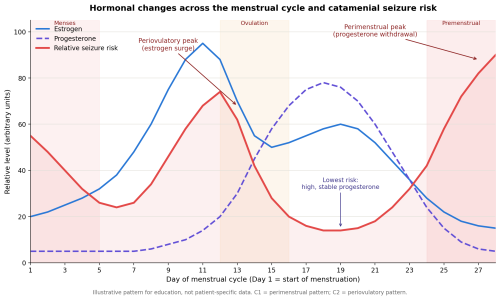 Epilepsy is a neurological condition marked by recurring seizures. We are not here to discuss the complex subject of epilepsy and epilepsy treatments in general, but specifically catamenial epilepsy…
 -
Son's TBI
Sep 14, 26 06:36 AM
My son had a catastrophic stroke in 2024. After years of theraphy the doctors are saying there is nothing more they can do for him. His right arm is -
A Gentle Transition: Safely Coming Off HRT Drugs
Sep 09, 26 06:28 AM
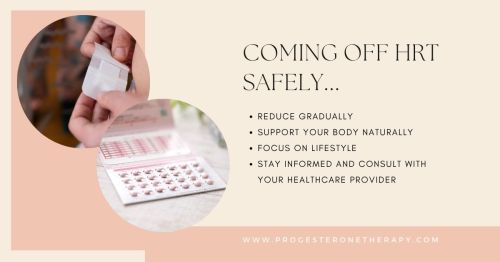 Are you considering coming off HRT (hormone replacement therapy) drugs, or perhaps worried about withdrawal symptoms? Many women face this challenge, and it can feel daunting. The good news is, with t…
 -
Can Progesterone Help with Uterine Fibroids?
Aug 25, 26 03:31 AM
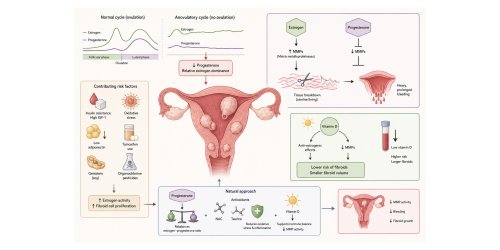 Uterine fibroids are benign growths of connective tissue and smooth muscle that develop predominantly in the uterus. They affect 15–20% of reproductive-age women, and up to 70–80% of women by the age…
Natural
progesterone cream
Your language
Translate this website
into your language
Is this the future
of medicine?
Home | Contact | Newsletter | Index of Symptoms | News | Progesterone cream | Privacy policy | Blog | About | FAQ
Disclaimer:
Although this web site is not intended to be prescriptive, it is intended, and hoped, that it will induce in you a sufficient level of scepticism about some health care practices to impel you to seek out medical advice that is not captive to purely commercial interests, or blinded by academic and institutional hubris. You are encouraged to refer any health problem to a health care practitioner and, in reference to any information contained in this web site, preferably one with specific knowledge of progesterone therapy.
