Polyendocrine Metabolic Ovarian Syndrome (PMOS)
Polyendocrine Metabolic Ovarian Syndrome (formerly known as PCOS) is one of the most common endocrine and metabolic disorders affecting girls and women worldwide. In 2026 the international consensus finally shifted away from the term “Polycystic Ovarian Syndrome” because the condition is not simply an ovarian disorder, nor is it defined by ovarian cysts alone. The name PMOS better reflects this complex metabolic, hormonal, inflammatory and reproductive syndrome affecting the entire body.
In reality, many women diagnosed with the condition do not have ovarian cysts, while others with cystic ovaries may have no symptoms at all. The so-called “cysts” are usually immature follicles arrested in development because ovulation is not occurring normally.
PMOS is best understood as a syndrome of hormonal imbalance, insulin dysregulation, inflammation and oxidative stress, all of which interact with one another. One of the most significant yet overlooked features is insufficient progesterone production due to infrequent or absent ovulation.
What Happens in PMOS?
Women with PMOS commonly experience a cascade of interconnected hormonal and metabolic disturbances:
- Irregular or absent ovulation
- Low progesterone levels
- Excess androgen production
- Insulin resistance and elevated insulin
- Blood sugar instability
- Chronic inflammation
- Oxidative stress
- Weight gain and difficulty losing weight
- Fertility problems
- Skin and hair symptoms
- Increased cardiovascular risk
When ovulation fails to occur, progesterone is not produced in adequate amounts because progesterone is primarily made after ovulation by the corpus luteum. This leaves oestrogen and androgens relatively unopposed, contributing to many of the symptoms associated with PMOS.
High insulin levels are another major driving factor. Excess insulin stimulates the ovaries to produce more androgens such as testosterone, while simultaneously suppressing normal follicular maturation and ovulation. This creates a vicious cycle:
High insulin → high androgens → anovulation → low progesterone → worsening hormonal imbalance.
Common Symptoms of PMOS
Symptoms vary greatly between women, and not every woman experiences all symptoms:
- Irregular periods
- Infrequent periods
- Absent periods
- Heavy bleeding or spotting
- Anovulation
- Infertility or difficulty conceiving
- Miscarriage risk
- Acne
- Oily skin
- Excess facial or body hair
- Hair thinning or male-pattern hair loss
- Deepening of the voice in severe cases
- Weight gain
- Difficulty losing weight
- Cravings for sugar and carbohydrates
- Fatigue
- Blood sugar instability
- Insulin resistance
- Elevated triglycerides
- Increased cardiovascular risk
- Chronic pelvic pain
- Elevated cortisol
- High homocysteine
- Oxidative stress
- Inflammation
- Mood disturbances
- Sleep problems
PMOS is increasingly recognised as a systemic condition rather than a purely reproductive one. Many women also experience neurological, immune and inflammatory symptoms alongside the metabolic and ovarian dysfunction.
The Role of Progesterone
Low progesterone is one of the central hormonal problems in PMOS because ovulation is disrupted or absent.
Progesterone helps:
- Stabilise blood sugar
- Oppose excess oestrogen activity
- Reduce androgen production
- Support normal ovarian function
- Calm the nervous system
- Reduce inflammation
- Inhibit 5-alpha reductase, an enzyme involved in androgen conversion
Progesterone deficiency can contribute to anxiety, insomnia, heavy bleeding, spotting, cravings, fluid retention and worsening androgen symptoms.
Using natural progesterone correctly can help restore balance while supporting ovarian recovery and reducing symptoms associated with androgen excess and insulin instability.
The Importance of Insulin Resistance
Insulin resistance is one of the key metabolic drivers behind PMOS.
When cells become resistant to insulin:
- The body produces more insulin
- High insulin stimulates androgen production
- Ovarian function becomes suppressed
- Ovulation becomes irregular
- Progesterone levels decline further
This is why addressing insulin resistance is often essential before normal ovarian function can resume.
Reducing refined carbohydrates, sugars and highly processed foods can dramatically improve insulin signalling. Many women find that stabilising blood sugar is one of the most effective steps toward improving hormonal balance.
Nutritional and Lifestyle Support
Vitamin D deficiency is extremely common in women with PMOS and may contribute significantly to insulin resistance, inflammation and ovarian dysfunction. Adequate vitamin D levels appear essential for proper hormonal signalling and for progesterone to function effectively.
Inositol
Inositol has been widely studied for its ability to improve insulin sensitivity and ovarian function.
Amino Acids and Antioxidants
Oxidative stress plays a major role in PMOS. Nutrients that support antioxidant pathways may assist recovery, including:
- N-acetyl cysteine (NAC)
- L-arginine
- Glycine
- Taurine
- Selenium
- Zinc
- Alpha lipoic acid
- CoQ10
Probiotics, soluble fibre, and adequate protein intake may help support insulin regulation, inflammation and gut health.
Homocysteine
Elevated homocysteine is often overlooked in PMOS and may contribute to cardiovascular risk and inflammation. Nutrients such as vitamins B2, B6, B12, folate, zinc and trimethylglycine (TMG) may help normalise levels.
Using Progesterone in PMOS
Natural progesterone is typically used during the luteal phase — the last 12–14 days of the cycle following ovulation.
However, cycles in PMOS are often irregular or absent. In these cases, many women initially follow a regular 28-day cycle until normal ovarian rhythm begins to return.
In severe cases with significant symptoms or continuous bleeding, progesterone may sometimes be used daily for several months before cycling again. The goal is to help calm inflammation, stabilise the endometrium, reduce androgen dominance and support ovarian recovery.
Stress can sharply reduce progesterone levels, so symptoms frequently worsen during periods of emotional or physical stress.
For more information see our page on PCOS.
Research papers
The Lancet, 2026; May 12, 2026; Teede H, Khomami M, Morman R et al.
Polyendocrine metabolic ovarian syndrome, the new name for polycystic ovary syndrome: a multistep global consensus process
Endocrine Society press release; May 12,2026
Polyendocrine Metabolic Ovarian Syndrome: New name to improve diagnosis and care of condition affecting 170 million women worldwide
Biol Trace Elem Res. 2013 Apr;152(1):9-15
Altered trace mineral milieu might play an aetiological role in the pathogenesis of polycystic ovary syndrome
Eur Rev Med Pharmacol Sci. 2013 Feb;17(4):537-40
The Combined therapy myo-inositol plus D-Chiro-inositol, in a
physiological ratio, reduces the cardiovascular risk by improving the
lipid profile in PCOS patients
Gynecol Endocrinol. 2013 Apr;29(4):375-9
Endocrine and clinical effects of myo-inositol administration in polycystic ovary syndrome. A randomized study
Eur Rev Med Pharmacol Sci. 2011 Oct;15(10):1212-4
Bye-bye chiro-inositol - myo-inositol: true progress in the treatment of polycystic ovary syndrome and ovulation induction
Gynecol Endocrinol. 2012 Jul;28(7):509-15
Effects of myo-inositol in women with PCOS: a systematic review of randomized controlled trials
Minerva Ginecol. 2012 Dec;64(6):531-8
Evaluation of the treatment with D-chiroi-nositol on levels of oxidative stress in pcos patients
J Ovarian Res. 2012 May 15;5(1):14
Does ovary need D-chiro-inositol?
NIH Thursday, May 24, 2012
Progestin treatment for polycystic ovarian syndrome may reduce pregnancy chances
Clin Endocrinol (Oxf). 2012 May 10
Vitamin D in the etiology and management of polycystic ovary syndrome
Eur Rev Med Pharmacol Sci. 2012 May;16(5):575-81
The combined therapy with myo-inositol and D-chiro-inositol reduces the
risk of metabolic disease in PCOS overweight patients compared to
myo-inositol supplementation alone
Eur Rev Med Pharmacol Sci. 2011 Apr;15(4):452-7
Myo-inositol rather than D-chiro-inositol is able to improve oocyte
quality in intracytoplasmic sperm injection cycles. A prospective,
controlled, randomized trial
Am J Clin Nutr 2011
Higher Protein Diet Helpful in PCOS
Fertil Steril. 2011;96:1128-1133
Metformin in Polycystic Ovarian Syndrome and Infertility
Gynecol Endocrinol. 2010 Apr;26(4):275-80
Insulin sensitiser agents alone and in co-treatment with r-FSH for ovulation induction in PCOS women
J Steroid Biochem Mol Biol. 2010 Oct;122(1-3):42-52
Insulin and hyperandrogenism in women with polycystic ovary syndrome
Human Reproduction 2009 24(11):2924-2930
Thyroid-stimulating hormone is associated with insulin resistance
independently of body mass index and age in women with polycystic ovary
syndrome
Gynecol Endocrinol. 2009 Aug;25(8):508-13
Efficacy of myo-inositol in the treatment of cutaneous disorders in young women with polycystic ovary syndrome
Fertil Steril. 2009 Jul;92(1):328-43
Melatonin and the ovary: physiological and pathophysiological implications
Rev Obstet Gynecol. 2009 Fall;2(4):232-9
Polycystic ovary syndrome: a major unrecognized cardiovascular risk factor in women
Gynecol Endocrinol. 2008 Mar;24(3):139-44
Myo-inositol administration positively affects hyperinsulinemia and
hormonal parameters in overweight patients with polycystic ovary
syndrome
Med Hypotheses. 2007;68(3):480-3
Polycystic ovary syndrome in men: Stein-Leventhal syndrome revisited
Endocr Pract. 2002 Nov-Dec;8(6):417-23.
Effects of d-chiro-inositol in lean women with the polycystic ovary syndrome
Biol Reprod. 1993 Oct;49(4):647-52
Pathologic effect of estradiol on the hypothalamus
Eur J Endocrinol. 2009 Oct;161(4):575-82. Epub 2009 Jul 23.
Association of hypovitaminosis D with metabolic disturbances in polycystic ovary syndrome
Endocrine Abstracts (2009)
Prolonged treatment with N-acetylcysteine and L-arginine restores gonadal function in patients with PCO syndrome
Med Hypotheses. 2009 Jun;72(6):647-51
Poor vitamin D status may contribute to high risk for insulin resistance, obesity, and cardiovascular disease in Asian Indians
Advances in Experimental Medicine and Biology 2009, Volume 643, Pages 353-358
Taurine Supplementation and Pancreatic Remodeling
Diabetes. 2008 Oct;57(10):2619-25
Baseline Serum 25-Hydroxy Vitamin D Is Predictive of Future Glycemic Status and Insulin Resistance
Diabetologia Issue Volume 51, Number 1 / January, 2008
Vitamin B12 and folate concentrations during pregnancy and insulin
resistance in the offspring: the Pune Maternal Nutrition Study
Early Human Development Volume 83, Issue 10, October 2007, Pages 693-696
Neonatal taurine administration modifies metabolic programming in male mice
Human Reproduction 2007 22(12):3264
Calcium homeostasis and anovulatory infertility
Eur Rev Med Pharmacol Sci 2007; 11 (5) : 347-354
Randomized,
double blind placebo-controlled trial: effects of Myo-inositol on
ovarian function and metabolic factors in women with PCOS
The Journal of Clinical Endocrinology & Metabolism 2007, Vol. 92, No. 7 2726-2733
Insulin and Insulin-Like Growth Factor Stimulation of Vascular
Endothelial Growth Factor Production by Luteinized Granulosa Cells:
Comparison between Polycystic Ovarian Syndrome (PCOS) and Non-PCOS Women
Exp Clin Endocrinol Diabetes. 2006 Nov;114(10):577-83
Low serum 25-hydroxyvitamin D concentrations are associated with
insulin resistance and obesity in women with polycystic ovary syndrome
European Journal of Endocrinology, 2006 Vol 154, Issue 1, 141-145
Metabolic syndrome in polycystic ovary syndrome (PCOS): lower
prevalence in southern Italy than in the USA and the influence of
criteria for the diagnosis of PCOS
Clinical Chemistry 51: 1691-1697, 2005
Serum Parathyroid Hormone Concentrations Are Increased in Women with Polycystic Ovary Syndrome
The Anatomical Record 2005 Volume 231, Issue 2 , Pages 185 - 192
Changes in ovarian morphology and serum hormones in the rat after treatment with dehydroepiandrosterone
American Journal of Clinical Nutrition, Vol. 79, No. 5, 820-825, May 2004
Hypovitaminosis D is associated with insulin resistance and cell dysfunction
The Journal of Clinical Endocrinology & Metabolism 2004, Vol. 89, No. 5 2160-2165
Increased C-Reactive Protein Levels in the Polycystic Ovary Syndrome: A Marker of Cardiovascular Disease
Clin Endocrinol 60(5):560-567, 2004
Plasma Homocysteine in Polycystic Ovary Syndrome: Does it Correlate With Insulin Resistance and Ethnicity?
Int J Mol Med. 2004 Aug;14(2):207-15
Induction of polycystic ovary by testosterone in immature female rats:
Modulation of apoptosis and attenuation of glucose/insulin ratio
STEROIDS Volume 69, Issues 11-12 , October-November 2004, Pages 763-766
Licorice reduces serum testosterone in healthy women
Am Fam Physician. 2004 Jan 15;69(2):264-266
Use of Metformin Is a Cause of Vitamin B12 Deficiency
Am Fam Physician. 2003 Mar 1;67(5):979-986
Vitamin B12 deficiency
Comparative Biochemistry and Physiology Part A 136 (2003) 95
Hyperinsulinemic diseases of civilization: more than just Syndrome X
Clinical Diabetes October 2003 vol. 21 no. 4 186-187
Glucose, Advanced Glycation End Products, and Diabetes Complications: What Is New and What Works
J Intern Med. 2003 Nov;254(5):455-463.
Effects of short-term treatment with metformin on serum concentrations
of homocysteine, folate and vitamin B12 in type 2 diabetes mellitus: a
randomized, placebo-controlled trial.
J Clin Endocrinol Metab. 2003 Dec;88(12):5907-13.
Altered cortisol metabolism in polycystic ovary syndrome: insulin
enhances 5alpha-reduction but not the elevated adrenal steroid
production rates.
Human Reproduction, Vol. 17, No. 6, 1459-1463, June 2002
Luteal phase progesterone excretion in ovulatory women with polycystic ovaries
Gynecologic and Obstetric Investigation and Vol. 53, No. 3, 2002
The Plasma Homocysteine Levels Are Increased in Polycystic Ovary Syndrome
Human Reproduction, Vol. 16, No. 10, 2061-2065, October 2001
Effects of androstenedione, insulin and luteinizing hormone on steroidogenesis in human granulosa luteal cells.
Prim. Care Update Ob Gyns 2001 Jan;8(1):12-17
The low-carbohydrate diet in primary care OB/GYN.
The Journal of Clinical Endocrinology & Metabolism 2001, Vol. 86, No. 6 2453-2455
Low Grade Chronic Inflammation in Women with Polycystic Ovarian Syndrome
New England Journal of Medicine , 340(17), 1999, pages 1314-1320.
Ovulatory and Metabolic Effects of D-Chiro-Inositol in the Polycystic Ovary Syndrome
Steroids. 1999 Jun;64(6):430-5
Vitamin D and calcium dysregulation in the polycystic ovarian syndrome
Gynecol Endocrinol. 1998 Feb;12(1):29-34.
Effects of estradiol and an aromatase inhibitor on progesterone production in human cultured luteal cells.
Archives of Environmental Contamination and Toxicology Volume 3, Number 4 / December, 1975: 479-490
Prolonged ingestion of commercial DDT and PCB; effects on progesterone levels and reproduction in the mature female rat.
Do you have a progesterone deficiency?
This free questionnaire
will tell you in 5 minutes.
Just enter your email
and click the button...
Subscribe to our Progesterone Therapy Newsletter
It's free and will bring you important new information on progesterone therapy, related health matters and discount specials.
Do you have a
question or concern?
See what's being discussed, ask for help, give your thoughts or experiences, or just browse...
or
Recent Articles


-
Progesterone Therapy & Catamenial Epilepsy
Sep 15, 26 08:30 AM
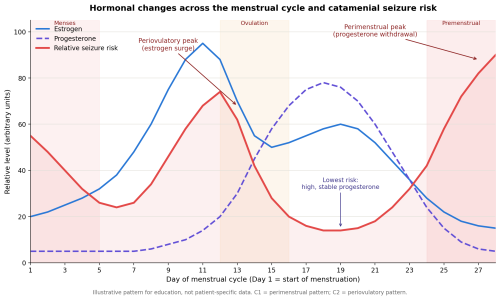 Epilepsy is a neurological condition marked by recurring seizures. We are not here to discuss the complex subject of epilepsy and epilepsy treatments in general, but specifically catamenial epilepsy…
 -
Son's TBI
Sep 14, 26 06:36 AM
My son had a catastrophic stroke in 2024. After years of theraphy the doctors are saying there is nothing more they can do for him. His right arm is -
A Gentle Transition: Safely Coming Off HRT Drugs
Sep 09, 26 06:28 AM
 Are you considering coming off HRT (hormone replacement therapy) drugs, or perhaps worried about withdrawal symptoms? Many women face this challenge, and it can feel daunting. The good news is, with t…
 -
Can Progesterone Help with Uterine Fibroids?
Aug 25, 26 03:31 AM
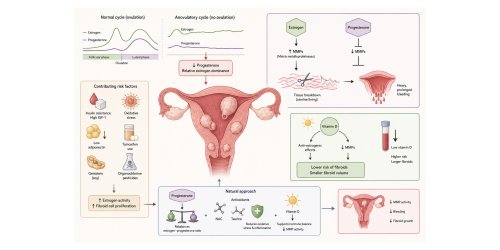 Uterine fibroids are benign growths of connective tissue and smooth muscle that develop predominantly in the uterus. They affect 15–20% of reproductive-age women, and up to 70–80% of women by the age…
 -
🌿 Hormone Balance & Heart Health
Aug 11, 26 08:31 AM
 Did you know that your heart health is deeply connected to your hormones—and that progesterone plays a crucial protective role? For years, the focus has been on cholesterol and blood pressure, but res…
Natural
progesterone cream
Your language
Translate this website
into your language
Is this the future
of medicine?
Home | Contact | Newsletter | Index of Symptoms | News | Progesterone cream | Privacy policy | Blog | About | FAQ
Disclaimer:
Although this web site is not intended to be prescriptive, it is intended, and hoped, that it will induce in you a sufficient level of scepticism about some health care practices to impel you to seek out medical advice that is not captive to purely commercial interests, or blinded by academic and institutional hubris. You are encouraged to refer any health problem to a health care practitioner and, in reference to any information contained in this web site, preferably one with specific knowledge of progesterone therapy.
